Mold And Water Florida, Inc.
Water Damage Insurance Claim – Step-by-Step Process Guide
IMPORTANT: Please retain this document for reference throughout your project.
At Mold And Water Florida, Inc., our mission is to provide professional mitigation services while guiding our customers through the insurance claim process with clarity, documentation, and industry-recognized standards. This document outlines our standard procedures so you understand what to expect at each phase of the project.
This guide is intended to answer common questions, reduce unnecessary delays, and serve as a reference point throughout the duration of the claim.
Mold And Water Florida, Inc. begins every project with a comprehensive on-site inspection. During this phase, our technicians will:
- Inspect all visibly and potentially affected areas
- Identify the source, category, and extent of water intrusion
- Record moisture readings using professional diagnostic equipment
- Utilize thermal imaging to identify concealed moisture
- Perform moisture mapping of affected building materials
Capture photographic documentation for insurance purposes
All findings are documented to support mitigation decisions and insurance reporting requirements.
STEP 1: Initial Property Inspection & Documentation
Based on the inspection findings, Mold And Water Florida, Inc. will initiate mitigation services in accordance with IICRC industry standards. This may include:
- Installation of commercial drying equipment (air movers, dehumidifiers, etc.)
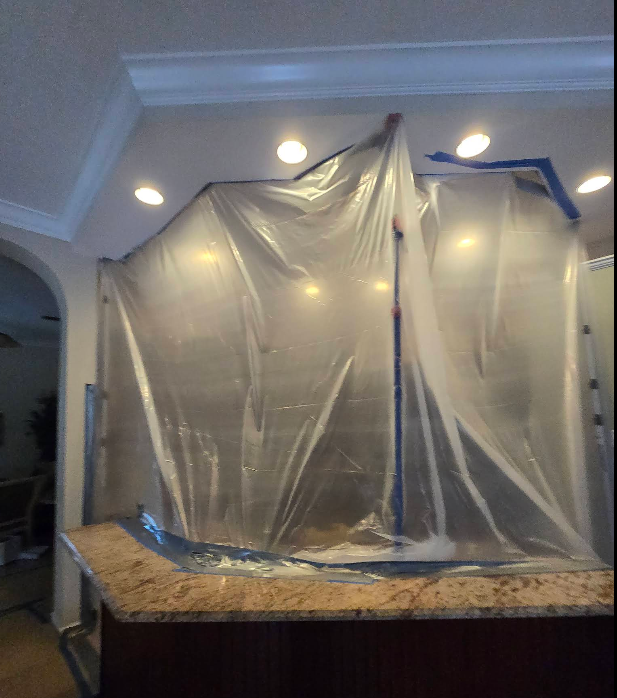
- Establishment of containments when required to protect unaffected areas
- Controlled airflow management to ensure proper drying conditions
Proper mitigation is critical to minimizing secondary damage, including microbial growth.
STEP 2: Water Mitigation & Drying Setup (IICRC Standards)
Throughout the drying process, Mold And Water Florida, Inc. will:
- Monitor moisture levels at scheduled intervals
- Adjust equipment placement and quantity as drying progresses
- Maintain detailed drying logs and reports
Drying duration is determined by measured moisture levels and material conditions, not by estimated timelines.
STEP 3: Ongoing Monitoring & Documentation
As a service to our customers, Mold And Water Florida, Inc. assists with insurance claim coordination, which may include:
- Assisting the customer with initiating the insurance claim
- Providing mitigation documentation, photos, and reports
- Communicating with insurance adjusters as necessary regarding mitigation scope
While Mold And Water Florida, Inc. is not a public adjuster, we work to ensure accurate documentation is provided to support the claim.
STEP 4: Insurance Claim Assistance
If conditions warrant, Mold And Water Florida, Inc. will arrange mold pre-testing to determine whether microbial growth is present within affected materials or wall cavities.
This testing establishes:
- Presence or absence of mold
- Baseline environmental conditions
- Independent laboratory verification for insurance documentation
STEP 5: Mold Pre-Testing (When Applicable)
If the source of loss is plumbing-related, repairs must be completed prior to proceeding.
- Customers may select their own licensed plumbing contractor, or
- Mold And Water Florida, Inc. may assist with coordinating a licensed plumber upon request
Source repairs are the responsibility of the property owner and are separate from mitigation services.
STEP 6: Plumbing Repair Coordination
Upon receipt of laboratory results, Mold And Water Florida, Inc. will:
- Review findings with the customer
- Provide electronic copies of all reports
- Forward documentation to the insurance adjuster when authorized
STEP 7: Mold Test Results & Insurance Reporting
If mold contamination is confirmed, Mold And Water Florida, Inc. will proceed with professional mold remediation services in compliance with applicable standards and protocols.
STEP 8: Mold Remediation (If Required)
Following completion of mitigation and remediation, Mold And Water Florida, Inc. may assist with:
- Preparation of rebuild and repair estimates
- Submission of estimates to the insurance carrier
- Clarification of scope required to return the property to pre-loss condition
STEP 9: Rebuild & Repair Estimating Assistance
Important Notes
Mitigation timelines are determined by moisture readings and material conditions
Insurance coverage decisions are made solely by the insurance carrier
Mold And Water Florida, Inc. provides mitigation and remediation services, not public adjusting services
Drying is a critical phase of water mitigation and is performed according to IICRC standards.
Typical Drying Timeline
- Drying typically requires 3–5 days, depending on the extent of damage, materials affected, and moisture readings
- In some cases, drying may take longer if required to meet industry-standard moisture levels
During the drying process, you can expect:
- Drying equipment (air movers and dehumidifiers) to operate continuously
- Noticeable equipment noise and warm air movement, which are normal and necessary
- Regular moisture readings and documentation by our technicians
- Equipment to be adjusted, reduced, or repositioned as drying progresses
Important: Drying timelines are determined by verified moisture readings and material conditions — not by a fixed schedule.
WHAT TO EXPECT DURING THE DRYING PROCESS
Drying Disclaimer: Drying equipment remains in place until industry-accepted moisture standards are met, regardless of estimated timelines.
WHAT TO EXPECT DURING MOLD REMEDIATION (WHEN REQUIRED)
If mold remediation is required, Mold And Water Florida, Inc. follows strict industry protocols to protect the property and occupants.
During remediation, you can expect:
These controls are designed to protect your home, maintain indoor air quality, and ensure the remediation process is completed safely and effectively.
FREQUENTLY ASKED QUESTIONS (FAQ)
How long will the drying equipment need to stay in my home?
Drying time varies based on the extent of damage, materials affected, and moisture readings. Equipment remains in place until industry-standard moisture levels are achieved, not based on a preset number of days.
Why must the equipment run 24/7?
Drying equipment must operate continuously to properly evaporate moisture and control humidity. Turning equipment off can significantly delay drying and increase the risk of mold growth.
Is it normal for the equipment to be loud or produce warm air?
Yes. Noise and warm airflow are normal and necessary for proper drying. This indicates the equipment is functioning correctly.
Can I move or unplug the equipment?
No. Equipment should not be moved, unplugged, or adjusted without authorization from Mold And Water Florida, Inc., as this may delay drying and impact insurance documentation.
Will my insurance cover the mitigation and remediation work?
Coverage decisions are made solely by your insurance carrier based on your policy. Mold And Water Florida, Inc. provides documentation to support the claim but does not determine coverage.
Why does the insurance process take time?
Insurance claims require review, documentation, and adjuster approval. Timelines can vary depending on the carrier, scope of damage, and responsiveness of involved parties.
Why is mold testing recommended?
Mold testing helps determine whether microbial growth is present, establishes a documented baseline, and provides certified laboratory results for the homeowner and insurance carrier.
Does visible mold always mean there is a health risk?
Not all mold presents the same level of concern. Testing and professional assessment help determine the appropriate course of action.
What is containment and why is it necessary?
Containment isolates affected areas to prevent cross-contamination. It is a standard industry practice during remediation to protect unaffected portions of the home.
What are air scrubbers and why are HEPA filters used?
Air scrubbers equipped with HEPA filters capture airborne particles, including mold spores and dust, helping maintain indoor air quality during remediation.
Can I stay in my home during mitigation or remediation?
In many cases, yes. However, certain situations may require limited access to affected areas. Mold And Water Florida, Inc. will communicate any restrictions in advance.
Will you remove my personal belongings?
Contents handling is evaluated on a case-by-case basis. If contents need to be moved or protected, this will be discussed prior to work being performed.
Why does work sometimes pause between steps?
Pauses may occur due to drying verification, laboratory testing timelines, source repairs, or insurance approvals. These pauses are normal within the mitigation and insurance process.
What happens if additional damage is discovered?
If additional damage is identified, Mold And Water Florida, Inc. will document findings and communicate updates to the customer and insurance carrier as appropriate.
What happens after mitigation and remediation are complete?
Once completed, Mold And Water Florida, Inc. can assist with rebuild and repair estimating to help transition the claim into the restoration phase.
Who should I contact if I have questions?
We encourage customers to first refer to this guide. If questions remain, our office is always available to assist.
Can Mold and Water Florida help with the insurance process?
Yes. We understand that dealing with property damage is stressful enough on its own. Our team helps provide the documentation, photos, and detailed information homeowners often need during the insurance claims process.
What should homeowners document after property damage?
It’s helpful to take photos of visible damage, affected belongings, standing water, and any impacted areas before cleanup begins whenever possible.
Why is mitigation important for insurance claims?
Insurance providers typically expect property owners to take reasonable steps to prevent additional damage after a loss occurs. Fast mitigation helps protect the property and supports the claims process.
Will insurance cover water or mold damage?
Coverage depends on the policy and the cause of the damage. Sudden events like burst pipes or storm damage are often treated differently than long-term issues or neglected maintenance.
How does Mold and Water Florida support homeowners during stressful restoration situations?
Our goal is to make the process feel less overwhelming. We focus on clear communication, fast response times, honest guidance, and helping families restore their homes as smoothly as possible.